


Many people unknowingly make common push-up mistakes that reduce effectiveness and increase the risk of injury.
Push-ups are one of the best bodyweight exercises for building upper-body and core strength, but incorrect form can limit your results and lead to discomfort.
If you experience wrist pain, shoulder strain, or lower back issues during push-ups, your form needs improvement.
The good news is that simple adjustments can help you get the most out of every rep. In this article, you’ll discover the 10 common push-up mistakes and how to correct them for better performance and safety.
Common Push-up Mistakes To Avoid
1. Limited Range of Motion
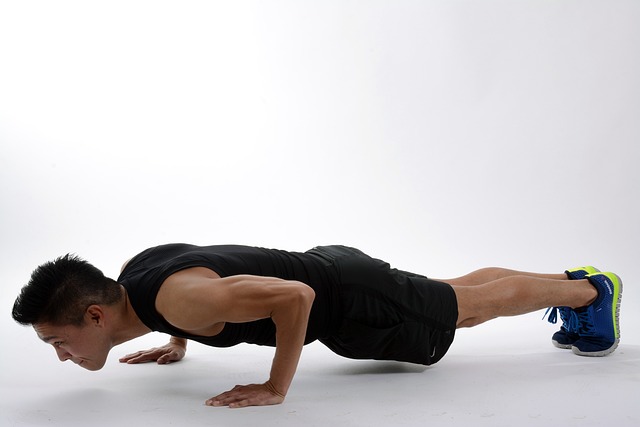
One of the most common push-up mistakes is performing half-reps, where your chest barely lowers toward the ground.
This drastically reduces muscle activation, limiting strength gains and endurance improvements.
When you fail to move through the full range of motion, your chest, shoulders, and triceps don’t get the full benefit of the exercise.
Additionally, partial reps reinforce poor habits, making it harder to progress to more advanced push-up variations.
Fix:
- Lower your chest as close to the ground as possible without touching it.
- Keep your elbows at a 45-degree angle for stability and control.
- Engage your core to maintain proper body alignment.
- If full push-ups are too difficult, start with knee push-ups or incline push-ups until you build strength.
2. Elbows Flaring Out Too Much
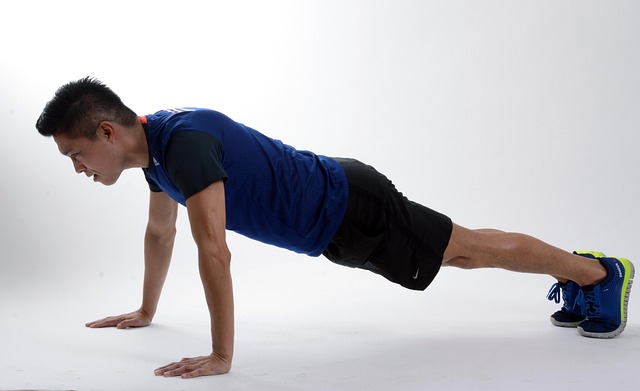
One of the most common push-up mistakes is allowing your elbows to flare too wide. Many people position their arms at a 90-degree angle from their torso, which places unnecessary stress on the shoulders and increases the risk of injury.
When elbows flare out excessively, the movement becomes unstable, reducing chest and triceps activation. Over time, poor elbow positioning can cause chronic shoulder pain and discomfort, making it harder to maintain a consistent workout routine.
By keeping your elbows closer to your body, you can protect your joints while maximizing strength gains.
Fix:
- Position your elbows at a 45-degree angle from your torso.
- Keep your hands slightly wider than shoulder-width apart for better stability.
- Engage your core and squeeze your glutes to maintain control.
- Perform push-ups in front of a mirror or record yourself to check elbow positioning.
3. Lower Back Sagging
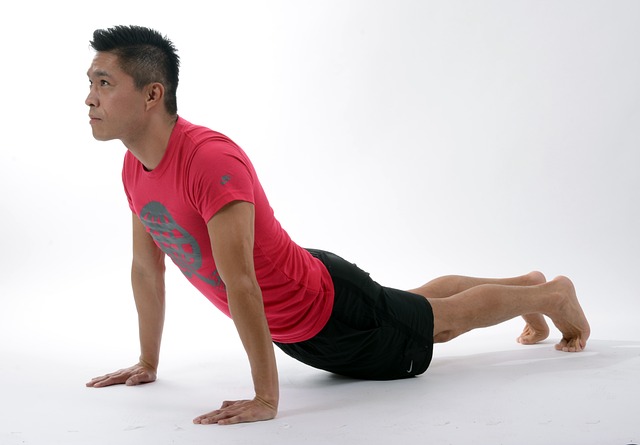
A sagging lower back is one of the most overlooked common push-up mistakes, and it often results from a weak core
When your hips drop too low, your lower back takes on unnecessary stress, increasing the risk of discomfort and potential injury.
This improper posture shifts the focus away from your chest and triceps, reducing the effectiveness of the push-up.
If left uncorrected, repeated stress on the lower back can cause long-term pain and instability.
Fix:
- Keep your core engaged throughout the movement to maintain stability.
- Squeeze your glutes and tighten your abs to prevent your hips from dipping.
- Perform plank exercises regularly to strengthen your core.
- If maintaining proper form is difficult, modify with knee push-ups or incline push-ups.
4. Upper Back Rounding
Rounding your upper back during push-ups reduces stability and muscle activation. Many people unknowingly hunch their shoulders forward, which shifts the focus away from the chest and triceps.
This mistake often stems from weak upper back muscles and poor scapular control. An arched back also places extra strain on the shoulders, increasing the risk of discomfort or injury.
Correcting this mistake not only improves push-up effectiveness but also enhances posture and overall upper-body strength. Maintaining a neutral spine and engaged scapula is key for maximizing push-up benefits.
Fix:
- Pull your shoulder blades down and back before starting your push-ups.
- Focus on keeping your chest open and leading with your sternum.
- Engage your core to maintain a strong, neutral spine.
- Strengthen your upper back with resistance exercises like face pulls and rows.
5. Neck Misalignment
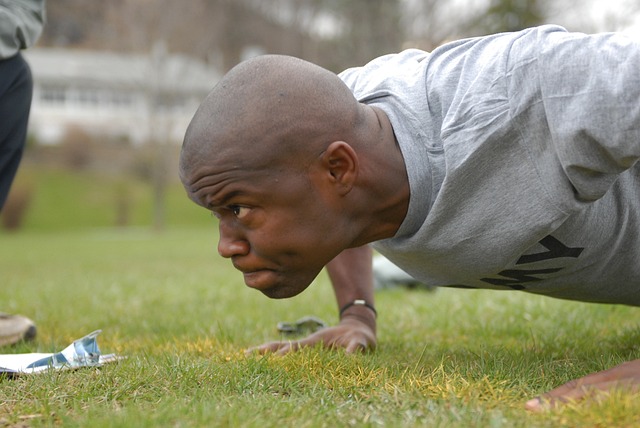
Keeping your neck in the wrong position is a subtle but critical common push-up mistake that can lead to pain and strain.
Many people look up, drop their heads, or tuck their chins too much while performing push-ups.
Incorrect head positioning not only increases neck tension but also disrupts spinal alignment, affecting overall form.
Over time, repeated misalignment can contribute to chronic discomfort in the neck and shoulders.
Fix:
- Keep your head in a neutral position, aligned with your spine.
- Look slightly ahead rather than straight down or up.
- Avoid excessive tension in your neck muscles while performing push-ups.
- Practice holding a neutral head position during planks to develop better posture.
6. Rushing Through Reps
Performing push-ups too quickly sacrifices quality for quantity. Many people rush through reps, relying on momentum rather than controlled movement.
This reduces muscle engagement and increases the likelihood of injury. Fast push-ups often result in improper form, such as incomplete range of motion or poor body alignment. Instead of focusing on speed, prioritize slow, controlled push-ups that maximize muscle activation.
Taking your time ensures that each rep is effective and helps build endurance and strength. Slow, deliberate movement is the key to maximizing push-up benefits.
Fix:
- Slow down and focus on controlled, deliberate reps.
- Pause briefly at the bottom to increase muscle activation.
- Perform tempo push-ups (lowering for three seconds, pausing, then pushing up).
- Prioritize proper form over speed and repetition count.
7. Incorrect Scapula Positioning
Poor scapula positioning is an overlooked yet serious common push-up mistake that weakens stability and power.
If your shoulder blades are either shrugged up or completely loose, it affects your ability to generate force.
This mistake often leads to instability and discomfort in the shoulders over time.
Fix:
- Keep your shoulder blades slightly retracted to improve stability.
- Avoid shrugging your shoulders toward your ears.
- Engage your scapula without excessive tension.
8. Ignoring Pain While Training

Ignoring pain while performing push-ups can lead to serious injuries. Pain is a warning sign that something is wrong, whether it’s improper form, overuse, or an existing condition.
Many people push through discomfort, assuming it’s part of the process, but this can cause long-term damage. If you experience sharp or persistent pain, it’s crucial to stop and assess your form.
Modifying push-ups based on your ability level can prevent injuries while allowing you to build strength safely. Pain-free training is essential for long-term progress and injury prevention.
Fix:
- Stop if you feel sharp or persistent pain during push-ups.
- Modify your push-ups with incline or knee variations to reduce strain.
- Strengthen weak muscles before progressing to standard push-ups.

Final Words
Avoid these common push-up mistakes to prevent injuries, maximize strength gains, and improve your technique.
Proper technique ensures that push-ups effectively engage your chest, shoulders, triceps, and core. Focusing on quality over quantity helps you get the best results while protecting your joints.
If you’re struggling with push-ups, make adjustments and practice consistently. The key to long-term progress is mastering proper technique and building strength gradually.
Now, it’s time to refine your push-up form and take your fitness to the next lev
- common push-up mistakes
el!