


How to Structure a Good Workout for Legs
As a certified strength and conditioning specialist who’s spent the last decade coaching everyday clients—not pro athletes, not influencers, just real people with busy schedules—I can tell you this: most people either overcomplicate leg training or avoid it entirely.
You’ve probably seen it. The gym is packed on Monday for chest day, and half empty when it’s time to train legs. I’ve worked with clients who proudly told me they “run sometimes” and assumed that was enough for lower-body strength. It’s not.
A good workout for legs should leave you stronger, more stable, and more capable in daily life—not wrecked for a week or nursing knee pain. Let me walk you through what I actually recommend and why.
Start With Squats — But Earn Them
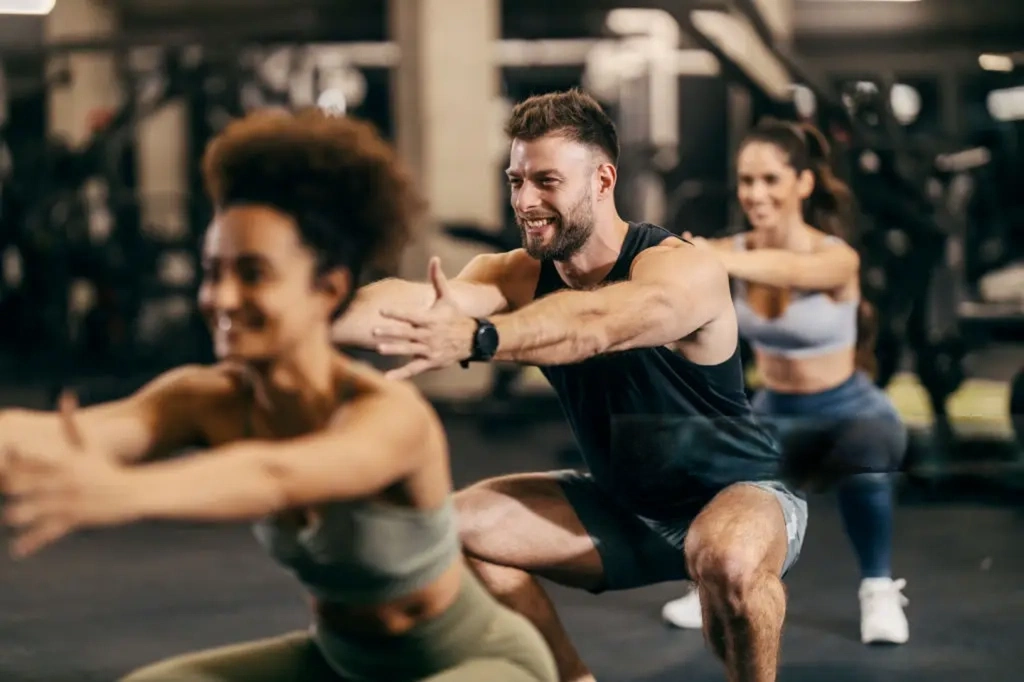
If you’re able to squat safely, I almost always include some variation. Back squats, goblet squats, front squats—it depends on your experience and mobility.
Early in my coaching career, I had a client who insisted on barbell back squats from day one. Within weeks, his lower back was irritated. The issue wasn’t squats—it was that he couldn’t control his pelvis at the bottom and had tight ankles. We stripped it back to goblet squats, slowed the tempo, and worked on depth. Within a couple of months, his form improved dramatically, and so did his leg size.
If you’re newer to training, I’ve found goblet squats to be one of the best teaching tools. Holding the weight in front naturally encourages better posture and depth.
Aim for 3–4 working sets in the 6–10 rep range. Focus on control, not ego lifting.
Don’t Skip the Hip Hinge
Strong legs aren’t just about quads. Your hamstrings and glutes are just as important, especially if you sit most of the day.
Romanian deadlifts are a staple in my programs. I prefer them over conventional deadlifts for many general fitness clients because they’re easier to learn and place more consistent tension on the hamstrings.
I remember coaching a client last spring who complained of “tight hamstrings.” After watching him move, I realized they weren’t just tight—they were weak. We added controlled Romanian deadlifts twice a week. Within weeks, his “tightness” reduced, and his lower back discomfort improved.
That’s something I see often: weakness disguised as tightness.
Keep your hinge work controlled. Push your hips back, keep a slight knee bend, and don’t chase the floor with the bar. If you feel it in your lower back more than your hamstrings, something’s off.
Lunges: Where Stability Is Built
If squats build strength and hinges build posterior power, lunges build balance and resilience.
Walking lunges, reverse lunges, Bulgarian split squats—I rotate these depending on your level. Reverse lunges are often kinder to the knees, especially if you’ve had irritation before.
I once worked with a client recovering from a minor knee issue. Forward lunges aggravated it, but reverse lunges were pain-free. That small change made the difference between consistency and frustration.
Unilateral work exposes imbalances quickly. You’ll probably notice one leg feels stronger. That’s normal. Address it by staying strict with form rather than rushing reps.
Two to three sets per leg is usually enough, especially if you’re already squatting and hinging.
Don’t Neglect Hamstring Isolation
Compound movements do a lot, but I’ve learned not to rely on them alone for hamstring development.
Leg curls—machine or banded—are underrated. In clients who struggle to “feel” their hamstrings during hinges, isolation work helps build that mind-muscle connection.
One middle-aged client I trained was convinced his legs “wouldn’t grow.” We added controlled seated leg curls at the end of his sessions, focusing on slow negatives. After a few months, his hamstring thickness visibly improved, and his squat numbers went up as a side effect.
Three controlled sets of 10–15 reps work well here.
Calves: Train Them Like You Mean It
Calves respond to consistency and volume. Most people throw in a half-hearted set at the end of a workout and wonder why nothing changes.
In my own training, I didn’t see calf growth until I started training them two to three times per week, using full range of motion and slow pauses at the bottom.
Standing calf raises hit the gastrocnemius; seated variations emphasize the soleus. You don’t need to overthink it—just control the movement and stop bouncing.
A Practical Structure That Works
Here’s how I often structure a solid leg session for general strength and muscle:
-
Squat variation: 3–4 sets
-
Romanian deadlift: 3 sets
-
Reverse or walking lunges: 2–3 sets per leg
-
Leg curls: 3 sets
-
Calf raises: 3–4 sets
That’s it. No circus tricks. No random hopping between machines.
Common Mistakes I See All the Time
One mistake I constantly correct is rushing reps. Leg training is uncomfortable. Your heart rate climbs. It burns. So you speed up to get it over with. That’s how form breaks down.
Another mistake is skipping rest. I’ve had clients try to turn leg day into cardio by resting 20 seconds between heavy sets. Strength doesn’t build that way. Give yourself enough time—often 90 seconds to two minutes—so you can perform properly.
And finally, many people train legs once a week and expect dramatic growth. I’ve consistently seen better results with twice-weekly lower-body work, even if each session is slightly lighter.

What I Personally Recommend
If you’re short on time, prioritize squats and Romanian deadlifts. If your knees are sensitive, emphasize reverse lunges and controlled tempo work. If you sit all day, double down on glute and hamstring strength.
A good workout for legs isn’t about destroying yourself. It’s about progressively building strength in patterns your body was designed to perform: squat, hinge, step, and push.
If you train with intention, control your reps, and stay consistent, your legs will get stronger—and daily life will feel easier because of it.