


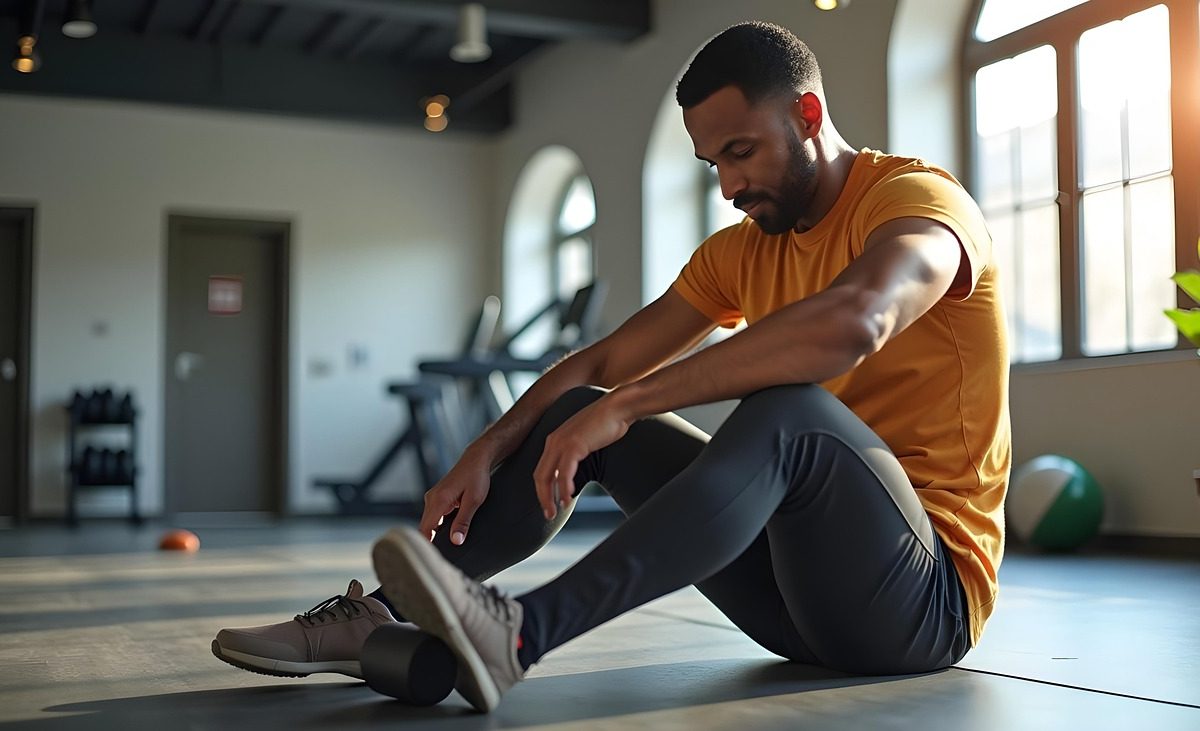
Leg Workout at Home – No Gym, No Problem! remains one of the most searched fitness routines for people training without equipment. You don’t need fancy gym memberships or machines to build strong, defined legs. Your body weight, a small space, and consistency are enough to develop power, balance, and tone.
Training at home increases flexibility in scheduling and reduces excuses. Each move in this routine targets every major lower-body muscle group while improving endurance, coordination, and joint stability.
Why You Should Prioritize Leg Workouts at Home
A leg workout at home delivers both strength and functional mobility. When you train without machines, your stabilizing muscles activate more deeply, improving control and reducing injury risk.
Strong legs improve posture, enhance athletic performance, and support everyday activities such as walking upstairs or carrying heavy bags. Even brief, consistent workouts make noticeable changes in muscle tone and endurance.
No Equipment? No Problem!
You can perform every movement with nothing more than your body weight. A yoga mat, towel, or sturdy chair can turn any corner of your home into a personal training zone.
Bodyweight training develops functional power — the kind you use daily. It also improves your cardiovascular capacity since compound leg movements elevate your heart rate.
Key benefits include:
- Increased muscular endurance and joint stability
- Greater calorie burn during and after workouts
- Enhanced balance and coordination
Consistent practice helps you achieve results similar to machine workouts — sometimes even better due to the focus on form and control.
Boost Muscle Growth and Strength
The legs contain major muscle groups — quadriceps, hamstrings, glutes, and calves. When you train these together, you generate significant strength gains and enhance metabolic rate.
Research on hypertrophy shows that even bodyweight resistance can trigger muscle growth when performed with progressive overload. Adding volume, time under tension, or controlled tempo makes each set more effective.
Functional Power Beyond the Gym
Leg strength affects every athletic skill — sprinting, jumping, and stabilizing the core. The legs act as the foundation for total-body movement. When you build a strong base, your upper body can perform better under load.
Examples of bodyweight progressions:
- Air Squats → Jump Squats → Pistol Squats
- Static Lunges → Reverse Lunges → Jump Lunges
- Glute Bridges → Single-Leg Glute Bridges → Hip Thrusts with Elevation
Each step increases intensity and keeps muscle fibers under new stimuli for continual growth.
Burn Fat and Tone Muscles
Leg workouts at home engage multiple large muscles simultaneously, increasing calorie burn. Exercises like squats and lunges raise the heart rate, turning each session into a mini-cardio workout.
Combining strength and endurance training creates lean, toned legs while supporting long-term fat loss.
Metabolic advantages:
- Elevated post-workout calorie burn
- Improved insulin sensitivity
- Enhanced resting metabolic rate
Toned thighs, sculpted calves, and firm glutes not only improve aesthetics but also signal strong, balanced muscles.
Improve Mobility and Balance
Mobility and balance often decline with age or inactivity. Regular leg workouts restore movement efficiency and prevent common joint issues.
Movements such as single-leg squats, lateral lunges, and calf raises improve proprioception — the body’s ability to sense position and control movement. Over time, this reduces the risk of knee or ankle injuries and increases joint stability.
Why Mobility Matters
- Improves coordination and reaction time
- Strengthens connective tissues around the knees and hips
- Supports everyday movement efficiency
A consistent leg workout routine builds confidence in motion — whether you’re climbing stairs or hiking uneven trails.
Functional Strength for Everyday Life
Strong legs directly enhance daily performance. They make carrying groceries, squatting to pick up items, or running errands more effortless. Building functional strength supports healthy movement patterns and protects joints.
Bodyweight workouts focus on real-world strength rather than isolated machine motion. Studies confirm that bodyweight training produces comparable improvements in muscular endurance and balance when performed regularly.
Essential Bodyweight Leg Exercises for Maximum Results
A balanced leg workout at home should engage all major lower-body muscles while improving endurance and flexibility. The following exercises require no equipment yet deliver maximum results.
1. Squats – The Foundation of Leg Strength
Squats remain the core movement of any leg routine. They target the quads, hamstrings, glutes, and calves while activating the core for stability.
Benefits:
- Builds total-leg strength
- Improves joint mobility
- Increases calorie expenditure
How to Perform:
- Stand with feet shoulder-width apart.
- Keep the chest upright and engage the core.
- Lower hips until thighs are parallel to the floor.
- Drive through the heels to return to standing.
Variations:
- Jump Squats – Boost power and cardiovascular demand.
- Sumo Squats – Target inner thighs and glutes.
- Bulgarian Split Squats – Focus on single-leg stability.
Consistent squats enhance both strength and endurance, serving as the foundation for all lower-body progressions.
2. Lunges – Building Stability & Strength
Lunges improve unilateral strength — training each leg individually to correct imbalances. This increases coordination and joint control.
Benefits:
- Strengthens glutes, quads, and hamstrings
- Enhances hip stability
- Improves balance and coordination
How to Perform:
- Step forward with the right leg.
- Lower the back knee toward the ground.
- Keep the front knee aligned over the ankle.
- Push through the front heel to return upright.
Variations:
- Reverse Lunges – Reduce knee strain.
- Lateral Lunges – Target inner and outer thighs.
- Jump Lunges – Add explosiveness and endurance.
These movements mirror real-life motions like climbing stairs or taking large strides, making them vital for building stability and strength in the lower body.
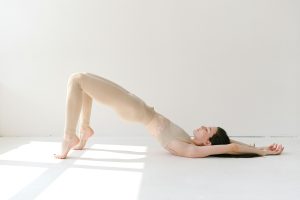
3. Glute Bridges – Strengthen Your Posterior Chain
The glute bridge strengthens the glutes, hamstrings, and lower back — essential for posture and athletic performance.
Benefits:
- Enhances glute activation
- Supports lower-back health
- Improves hip mobility
How to Perform:
- Lie on your back with knees bent and feet flat.
- Drive through heels to lift hips.
- Squeeze glutes at the top.
- Lower slowly and repeat.
Variations:
- Single-Leg Glute Bridge – Emphasizes unilateral strength.
- Elevated Glute Bridge – Increases range of motion for deeper activation.
Perform glute bridges before squats or lunges to “wake up” your posterior chain for better engagement.
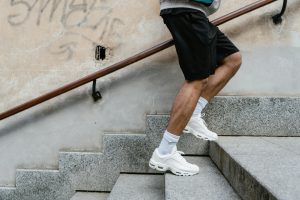
4. Calf Raises – Define and Strengthen Your Calves
Calf raises isolate the lower leg, improving balance and joint stability. The gastrocnemius and soleus muscles both benefit from controlled repetitions.
Benefits:
- Strengthens ankles and feet
- Improves running and jumping performance
- Adds definition to the lower leg
How to Perform:
- Stand with feet hip-width apart.
- Raise heels slowly until standing on toes.
- Hold briefly, then lower under control.
Variations:
- Single-Leg Calf Raise – Improves balance and coordination.
- Wall-Assisted Calf Raise – Increases motion depth safely.
For better definition, aim for high-rep sets (20-30 reps) with full control.
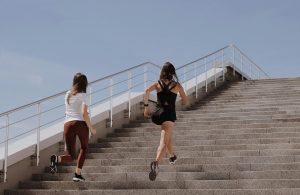
5. Step-Ups – Power and Endurance Builder
Step-ups simulate stair climbing and train each leg separately, improving symmetry and balance.
Benefits:
- Builds leg power and cardiovascular endurance
- Enhances coordination
- Strengthens glutes, quads, and calves
How to Perform:
- Use a sturdy chair or step.
- Step up with one foot, then bring the other to meet it.
- Step back down and repeat.
Variations:
- Explosive Step-Ups – Add a jump at the top.
- Slow Step-Ups – Emphasize control and muscle tension.
Integrate this move into circuits for endurance or pair it with squats for compound fatigue.
6. Wall Sits – The Ultimate Leg Endurance Challenge
Wall sits develop muscular endurance and mental toughness. They isolate the quads and glutes while improving static strength.
Benefits:
- Builds quadriceps endurance
- Improves posture and balance
- Increases core stability
How to Perform:
- Press your back flat against a wall.
- Lower into a 90-degree seated position.
- Hold the pose as long as possible.
Variations:
- Weighted Wall Sit – Add load with a backpack.
- Pulse Wall Sit – Small up-and-down motions increase burn.
According to Medical News Today, isometric holds like wall sits effectively develop muscular endurance and stamina in the lower body.
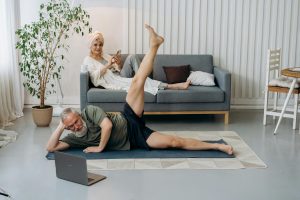
7. Lateral Leg Raises – Sculpt Your Outer Thighs
Lateral leg raises engage the gluteus medius and minimus, key muscles for hip stability and outer-thigh tone.
.
Benefits:
- Strengthens hip abductors
- Enhances lateral balance
- Shapes outer thighs and glutes
How to Perform:
- Lie on one side with legs stacked.
- Lift the top leg slowly to hip height.
- Lower it back without touching the bottom leg.
Variations:
- Standing Lateral Raise – Adds core engagement.
- Resistance Band Raise – Increases difficulty and muscle tension.
Balanced hip strength reduces risk of instability and aligns gait patterns.
Structured No-Equipment Leg Workout Routine
Creating a structured home routine ensures consistent progress. Choose your level and follow the outlined sessions below.
Beginner Routine (20 minutes, 3 rounds)
- 15 Squats
- 12 Lunges (each leg)
- 15 Glute Bridges
- 10 Calf Raises
- 30-Second Wall Sit
Goal: Build base strength & endurance
Intermediate Routine (25 minutes, 4 rounds)
- 20 Jump Squats
- 15 Reverse Lunges
- 15 Single-Leg Glute Bridges
- 20 Elevated Calf Raises
- 45-Second Wall Sit
Goal: Improve stability & mobility
Advanced Routine (30 minutes, 5 rounds)
- 25 Jump Squats
- 20 Jump Lunges
- 20 Single-Leg Glute Bridges
- 25 Calf Raises
- 1-Minute Wall Sit
Goal: Maximize endurance & power
Expert Tips to Maximize Your Home Leg Workout
1. Prioritize Proper Form
Proper form defines every successful leg workout at home. Sloppy technique reduces activation and increases injury risk.
Keep your back straight, chest lifted, and knees aligned with toes. Move with intention rather than speed.
Checklist for better execution:
- Maintain a neutral spine during squats and lunges.
- Track knee alignment to prevent inward collapse.
- Control both concentric and eccentric phases.
- Focus on breathing rhythm for oxygen efficiency.
Every rep performed with precision strengthens neuromuscular control and improves results faster than rushed, careless sets.
2. Increase Intensity Over Time
Progressive overload drives muscle growth and endurance. Your body adapts quickly, so gradual intensity increases are vital.
Use small adjustments to challenge muscles without compromising form.
Ways to scale up:
- Add repetitions or rounds weekly.
- Slow each phase to extend time under tension.
- Include plyometric drills such as jump squats or explosive step-ups.
- Shorten rest intervals for metabolic conditioning.
This incremental method ensures consistent adaptation, mirroring the structured approach of bodyweight workout routine.
3. Engage Your Core for Stability
Strong legs depend on a stable core. Core engagement maintains alignment and distributes force evenly through each movement.
Key effects:
- Reduces pressure on the lower back.
- Improves overall balance and coordination.
- Enhances power transfer during jumps and squats.
Technique tip:
Brace your abs as if preparing for impact. Maintain tension through every rep.
Neglecting this connection leads to inefficient movement and poor joint control.
4. Utilize Household Items for Resistance
You don’t need barbells or machines to boost resistance. Everyday objects can mimic gym equipment effectively.
Creative resistance ideas:
- Backpack filled with books – Wear during squats or lunges to simulate load.
- Sturdy chair or couch – Perfect for Bulgarian split squats or step-ups.
- Water bottles or milk jugs – Act as light dumbbells for calf raises.
- Towel on smooth floor – Enables sliding lunges and hamstring curls.
These objects increase mechanical tension and variety, promoting consistent muscle activation even in compact living spaces.
5. Stay Consistent for Results
Consistency remains the real differentiator in fitness. Sporadic effort rarely produces measurable strength or tone.
Practical structure:
- Train 3–4 times weekly.
- Track performance in a simple log.
- Allow rest days for recovery and adaptation.
- Rotate variations to prevent stagnation.
A disciplined schedule ensures steady improvement in endurance, flexibility, and power.
Complementary Recovery and Nutrition Tips
Optimize Recovery Between Sessions
Recovery accelerates muscle growth and prevents fatigue buildup. Prioritize rest as actively as training.
- Sleep 7–9 hours for hormonal balance.
- Stretch or perform light yoga on rest days.
- Use gentle foam rolling to release tension.
- Hydrate consistently for muscle elasticity.
Micro-tears from intense leg sessions rebuild stronger when supported by proper recovery habits.
Fuel Your Workouts with Smart Nutrition
Balanced nutrition powers every rep and repair cycle.
- Protein (1.6–2 g per kg body weight) aids tissue growth.
- Complex carbohydrates replenish glycogen for energy.
- Healthy fats regulate hormone production.
- Micronutrients such as magnesium and potassium maintain muscle function.
Consistent fueling reinforces progress from your leg workout at home routine.
Common Mistakes to Avoid
- Skipping Warm-Up: Cold muscles are prone to strain. Always include dynamic stretches and activation drills.
- Overtraining: Training daily without recovery can reduce performance.
- Poor Range of Motion: Half-reps limit engagement. Perform full depth within comfort.
- Ignoring Balance Work: Unilateral moves prevent asymmetry.
- Neglecting Progress Tracking: Without data, you can’t measure improvement.
Addressing these errors prevents setbacks and maintains healthy progress.
Motivation and Mindset for Home Training
Staying motivated outside a gym environment requires structure and intent.
Create a dedicated workout zone, even a small one. Visual cues like a mat or timer reinforce habit formation.
Mindset cues:
- Celebrate small milestones — added reps, longer holds.
- Pair training with uplifting playlists.
- Share progress photos monthly to visualize transformation.
Building momentum through consistency transforms a simple leg workout at home – no gym, no problem routine into a lifestyle habit.
Track Progress and Set Realistic Goals
Monitoring progress improves accountability.
Record repetitions, duration, and perceived effort weekly.
Gradual measurable gains — stronger holds, deeper squats — prove adaptation.
Example tracking template:
| Metric | Week 1 | Week 4 | Week 8 | Change |
|---|---|---|---|---|
| Wall Sit Hold (sec) | 30 | 50 | 75 | +45% |
| Jump Squats (reps/round) | 12 | 18 | 25 | +108% |
| Glute Bridge (max reps) | 15 | 25 | 35 | +133% |
Visible data strengthens motivation and confirms training efficiency.
Safety and Injury Prevention
Even with perfect form, overuse or imbalance can create tension.
- Warm up thoroughly before each session.
- Stretch calves, hamstrings, and hip flexors post-workout.
- Vary intensity weekly to avoid plateau and fatigue.
- Stop immediately if sharp pain occurs.
Following these safety measures ensures longevity in your home training journey.
Incorporate Cardio for Balanced Conditioning
Adding low-impact cardio complements leg training by improving endurance and fat oxidation.
Simple options include:
- Stair climbing for power.
- Brisk walking for active recovery.
- Jump rope intervals for coordination.
- Cycling for joint-friendly conditioning.
Blending strength and cardio creates balanced athletic capacity and supports overall wellness.
Sample Weekly Schedule
| Day | Focus | Duration |
|---|---|---|
| Monday | Beginner or Intermediate Leg Routine | 25 min |
| Tuesday | Active Recovery – Stretch + Mobility | 20 min |
| Wednesday | Advanced Power Session | 30 min |
| Thursday | Rest or Light Cardio | 20 min |
| Friday | Stability & Balance Drills | 25 min |
| Saturday | Mixed Routine + Core | 30 min |
| Sunday | Full Rest | – |
This simple plan fits most home schedules and supports steady performance gains.
Mind–Muscle Connection and Focus Techniques
Directing attention to the working muscle boosts activation. During squats, visualize quads pushing the floor away; during bridges, picture glutes contracting tightly.
Research indicates that intentional focus can increase muscle fiber recruitment even in bodyweight exercises.
Adapting the Routine for Different Goals
For Strength:
Perform fewer reps (8–12) with slow tempo and added resistance (backpack).
For Endurance:
Increase reps (15–25) and reduce rest intervals.
For Fat Loss:
Combine circuits with minimal rest to elevate heart rate and burn more calories.
Adjusting variables maintains challenge while preventing adaptation.
Community and Accountability
Connecting with peers online or in-person sustains motivation. Join fitness forums, social groups, or track workouts with friends. Friendly competition can elevate consistency.
Integrate insights from building strength, endurance, and mobility to balance goals beyond aesthetics.
Conclusion
With Leg Workout at Home – No Gym, No Problem!, there’s genuinely nothing stopping you from achieving strong, toned legs.
Bodyweight training builds stability, endurance, and muscle tone without machines.
Commit to 3–4 sessions weekly, track progress, and keep refining form. Over time, you’ll notice not just physical change but increased energy, mobility, and confidence in movement.
Your environment doesn’t limit your growth — consistency does the real work.
Frequently Asked Questions
How can I train my legs at home without any equipment?
Use bodyweight moves like squats, lunges, glute bridges, and calf raises. Focus on slow, controlled form and steady progress to build strength and endurance.
What are the most effective leg exercises I can do at home?
Squats, lunges, step-ups, wall sits, and glute bridges strengthen all major leg muscles and improve balance, stability, and mobility.
How do leg workouts help me move better and stay balanced?
They strengthen stabilizing muscles around your hips, knees, and ankles. That improves coordination, posture, and control during everyday movement.
Which at-home exercises help tone legs and burn fat?
Jump squats, lunges, step-ups, and wall sits work large muscles and raise your heart rate, helping tone and shape your legs while burning calories.
How does training my legs help my overall fitness?
Stronger legs improve running, jumping, and core stability. They boost performance in sports and make daily tasks like climbing stairs or lifting easier.
What’s the best way to build leg strength at home without weights?
Train with intention. Add reps each week, slow down your movements, or wear a loaded backpack to increase resistance.
Are bodyweight exercises as effective as gym machines for leg strength?
Yes. Bodyweight workouts engage more stabilizing muscles, improving balance and strength when done with good form and effort.
Can you suggest a simple leg workout for endurance and mobility?
Try 4 rounds of: 20 squats, 15 lunges per leg, 15 glute bridges, 20 calf raises, and a 45-second wall sit. It builds strength, balance, and control.
What should I focus on if I want to burn fat and tone my legs?
Do compound moves like squats, lunges, and step-ups with short rest breaks. They build lean muscle and keep your heart rate elevated.
Which leg exercises help most with everyday strength?
Squats, step-ups, and lunges mirror daily movements. They make walking, carrying, and bending easier by building strong, steady legs
Can I build leg muscle without lifting weights?
Yes. Controlled bodyweight training with higher reps and slower tempo builds real muscle and endurance over time.
How can I build leg muscle faster?
Challenge your muscles with jump squats, explosive step-ups, and shorter rest. Pair that with enough protein and consistent training.
Is 20 minutes of leg training enough?
A focused 20-minute session, done several times a week with effort and precision, is plenty to build tone and strength.
Can squats without weights still grow muscle?
Absolutely. Perform them slowly, go deep, and increase reps or switch to single-leg squats to keep your muscles adapting.
Is it possible to grow my legs using only bodyweight exercises?
Yes. With progressive challenges like jump squats, lunges, and pistol squats, your legs can grow stronger and more defined.
2 Comments